

Last Updated: November 1, 2026
Quick Summary
A cotton-polyester blend is the safest all-around choice for graphic tees fabric, holding shape and print well while resisting wrinkles and shrinkage. Tri-blends win on softness and drape, and 100% cotton remains the standard for sharp screen printing.
- A 60/40 cotton-leaning blend feels like cotton but behaves better in the laundry for weekly wear.
- Tri-blends combine cotton, polyester, and rayon for the softest option, but prints wear sooner.
- 100% ringspun or combed cotton is the best fabric for screen printing due to even ink adhesion.
- Midweight fabric of roughly 5-6 oz or 150-180 GSM is the everyday standard for graphics.
- Wash cold inside out and skip high dryer heat to protect a print from cracking.
Table of Contents
- Why the Fabric Blend Decides How a Graphic Tee Wears
- Cotton Polyester Blend T-Shirts: The Workhorse Middle Ground
- Tri-Blend T-Shirts: Softness, Drape, and a Print Trade-Off
- The Best Fabric for Screen Printing: Ink Adhesion by Blend
- T-Shirt Fabric Weight Guide: GSM, Ounces, and What They Mean
- Matching the Blend to Your Artwork, Skin, and Budget
- Picking Your Next Graphic Tee With the Backbone Mindset
- Frequently Asked Questions
Why the Fabric Blend Decides How a Graphic Tee Wears
The best graphic tees fabric blends balance three things: how the shirt feels, how the print holds up, and how it survives the wash. Most buyers pick a graphic tee by the design alone, six months later the print is cracked and the shirt has twisted.
Here is the short answer. A cotton-polyester blend is the safest all-around choice for most graphic tees, tri-blends win on softness and drape, and 100% cotton remains the standard for sharp screen printing.
Graphic tees fabric composition is the single biggest factor in how a graphic tee ages. It decides how ink bonds to the surface, how the shirt moves on your body, and whether the print still looks sharp after thirty washes.
Cotton Polyester Blend T-Shirts: The Workhorse Middle Ground
Cotton polyester blend T-shirts are the most practical everyday option for most people. The cotton brings softness and breathability, while the polyester adds strength, shape retention, and resistance to wrinkles and shrinkage.
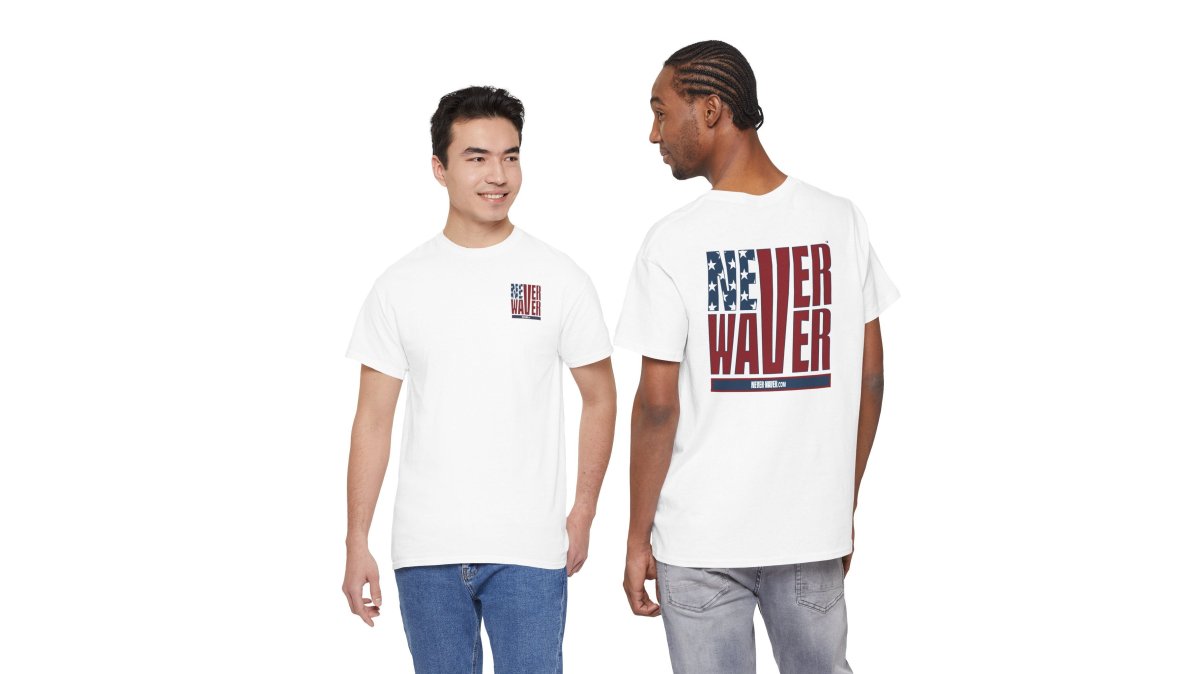
This is the fabric you reach for when you want a graphic tee that looks the same on wash twenty as it did on day one. You can put that guidance into practice with a Never Waver® Unisex Heavy Cotton Tee.

Pros: holds its shape, resists wrinkles, dries quickly, takes print well, budget-friendly. Cons: less breathable than pure cotton in extreme heat, and the polyester content can feel slightly less natural against the skin.
50/50 and 60/40: What the Ratios Actually Change
The blend ratio tells you which fiber is doing the heavy lifting. A 50/50 blend splits the difference evenly: moderate softness, moderate durability, dependable print performance. A 60/40 blend tips the balance toward whichever fiber leads.
- 60% cotton / 40% polyester: softer hand feel, more breathability, better for warm climates and sensitive skin.
- 60% polyester / 40% cotton: stronger wrinkle resistance, faster drying, better shape retention over years of washing.
For a graphic tee you plan to wear weekly, a 60/40 cotton-leaning blend is the sweet spot. It feels like cotton but behaves better in the laundry.
Tri-Blend T-Shirts: Softness, Drape, and a Print Trade-Off
Tri-blend T-shirts combine cotton, polyester, and rayon, and they are the softest option on this list.
Tri-blends are a favorite for vintage-style graphics and heathered colorways.
Pros: exceptional softness, flattering drape, vintage look, lightweight and comfortable. Cons: the trade-off is print durability.
If your design is bold and simple, tri-blend is a great canvas.
You can see this softer fabric experience in practice with a Softstyle tee built for that drape and hand feel.

The Best Fabric for Screen Printing: Ink Adhesion by Blend
The best fabric for screen printing is 100% ringspun or combed cotton, because the smooth, consistent surface lets plastisol and water-based inks bond evenly and hold fine detail.
| Print Method | Best Fabric | Print Durability | Practical Trade-Off |
|---|---|---|---|
| Screen printing (plastisol) | 100% cotton, cotton-rich blends | High | Sharpest detail and best ink adhesion; plastisol sits on top of the fiber, so textured or high-poly surfaces can show a plastic hand-feel |
| Screen printing (water-based) | 100% cotton | High | Soaks into the fiber for a soft, worn-in look; less opaque on dark garments and less forgiving on poly |
| DTG (direct-to-garment) | Cotton and cotton-rich blends | Medium-high | Cotton takes the pretreatment and ink best; high-poly blends can look washed out or fade faster |
| Dye sublimation | Polyester and poly-blends | High on poly | Bonds to synthetic fibers; will not work on 100% cotton because the dye needs a poly surface to attach to |
| Heat transfer / vinyl | Cotton and cotton-poly | Medium | Works on most blends; high-poly and tri-blend surfaces can release the adhesive sooner with repeated washing |
The key principle: the smoother and more absorbent the fiber, the better the ink grabs. Cotton absorbs. Polyester repels unless the ink is formulated for synthetics. Rayon sits somewhere in between and can lead to uneven curing.
Why the Fiber Matters to the Ink
Screen printing ink does not bond the same way across fibers. On cotton, plastisol cures into the surface and water-based ink soaks in, which is why cotton produces the crispest edges and softest hand-feel.
Small print shops often keep two ink systems on hand: standard plastisol for cotton and cotton-rich blanks, and low-bleed poly ink for performance and sublimation-friendly shirts. That is a production cost, and one reason high-poly blanks are less common for detailed screen-print work.
Matching the Method to the Blend
- Bold, one- or two-color graphics: screen printing on 100% cotton or a 60/40 cotton-leaning blend gives the cleanest result and the longest print life.
- Photographic or full-color artwork: DTG on a cotton-rich blend balances detail and durability better than DTG on high-poly, which tends to look faded sooner.
- All-over or sleeve-to-sleeve prints: dye sublimation on polyester or a poly-blend is the only method that wraps color around seams cleanly; it will not work on pure cotton.
Print Durability After Repeated Washing
Print durability comes down to ink adhesion and how you wash the shirt. A well-printed cotton tee can hold a crisp graphic for years; a poorly cured print on any fabric will crack within months.
Three habits protect a print:
- Wash cold, inside out, on a gentle cycle.
- Skip the dryer's high heat; tumble low or hang dry.
- Avoid fabric softener, which coats fibers and weakens ink bonds.
A common mistake is drying a graphic tee on high heat. That single habit does more damage to a print than a hundred gentle washes.
Never Waver® American Flag Unisex Heavy Cotton Tee →
Shrinkage and Color Retention by Blend
Shrinkage is a fiber behavior, not a washing accident. Cotton shrinks most in the first few washes, especially in a 100% cotton tee that has not been pre-shrunk.
Color retention follows a similar pattern. Cotton dyes deeply but can fade with repeated washing, especially in dark colors. Polyester holds dye well but is prone to dye migration under high heat.
T-Shirt Fabric Weight Guide: GSM, Ounces, and What They Mean
Fabric weight tells you how substantial a shirt feels and how well it holds a print. GSM (grams per square meter) and ounces per square yard are the two measurements you will see, and they map to three basic tiers.
- Lightweight (roughly 4-5 oz, under 150 GSM): thin, breathable, best for summer and layered looks. Prints can show through on very thin fabric.
- Midweight (roughly 5-6 oz, 150-180 GSM): the everyday standard. Good opacity, comfortable year-round, reliable for most graphics.
- Heavyweight (roughly 6-7+ oz, 180+ GSM): structured, durable, premium feel. Excellent for bold prints and long-term wear.
Heavier fabric holds a print with less distortion and resists pilling and shrinkage better. Lighter fabric feels cooler but can let a large graphic peek through.
Matching the Blend to Your Artwork, Skin, and Budget
The right blend depends on what you are printing, who is wearing it, and what you can spend. There is no single best fabric blends for graphic tees answer that fits every case, so match the fabric to the job. Most guides stop at "cotton for detail, tri-blend for softness." The useful version is more specific: the artwork, the wearer's skin, and the order size each push the decision in a different direction.
Match the Blend to the Artwork
Not all graphics behave the same on fabric. The blend you choose should follow the design, not the other way around.
- Dark garments with light ink: a cotton-poly blend holds opacity better than pure cotton, which can let the shirt color show through a light print. High-poly blanks risk dye migration, so a 60/40 cotton-leaning blend is the safer dark-garment choice for screen printing.
- Fine detail and small lettering: 100% cotton or a cotton-rich blend gives the sharpest edges. Tri-blends soften thin lines, so small text can look fuzzy even on a clean print.
- Vibrant, multi-color, or photographic designs: DTG on a cotton-rich blend, or dye sublimation on a poly-blend if the design wraps the whole shirt. Pure cotton limits sublimation entirely.
A simple rule: the more detail and color in the design, the more you want cotton in the blend and a print method that matches it. The bolder and simpler the design, the more freedom you have to chase softness or drape.
Match the Blend to the Skin
Skin sensitivity is mostly about fiber and finish, not brand. Cotton is the least likely to irritate because it breathes and wicks moisture away from the skin. Polyester traps heat and moisture, which can aggravate sensitive skin during heavy wear.
- Sensitive skin: lean cotton-heavy, 100% cotton or a 60/40 cotton-leaning blend.
- Hot climates or heavy sweating: cotton-rich blends manage moisture and breathe better than high-poly options.
- Everyday all-day wear: a 50/50 or 60/40 blend balances breathability with the shape retention that keeps a shirt from stretching out.
If a shirt will be worn against the skin for long stretches, the fiber content matters more than the print. A great graphic on an uncomfortable shirt does not get worn.
Match the Blend to the Budget and the Order Size
Cost is a real constraint, and the blend affects it in two ways: the blank itself and the print method it allows.
Watch out: buying on price alone often means a high-polyester shirt that pills and fades fast. The few dollars saved rarely survive a year of wear.
If you are still weighing styles, fit, and quality, our freedom shirt guide walks through the decision. This guide to selecting a graphic shirt design covers artwork and layout choices that pair well with each blend.
Picking Your Next Graphic Tee With the Backbone Mindset
Choosing a shirt sounds small. Doing it deliberately is not.
A graphic tee is a wearable statement. When the fabric holds up and the print stays sharp, the message stays legible, wear after wear.
At Never Waver®, every graphic tee carries that idea. Our shirts are built to represent conviction, character, and personal responsibility.
If you want to understand the mindset behind the brand, read the signs of a Backbone Mindset and see what real character looks like in daily decisions.
Frequently Asked Questions
What fabric blend is best for graphic tees?
There is no single winner, but ring-spun cotton and 50/50 cotton-polyester blends cover most needs. Cotton gives natural breathability; the cotton-polyester blend adds wrinkle resistance and faster drying. Match the blend to how you wear the shirt and how the graphic is printed.
Is cotton or polyester better for printed T-shirts?
Cotton breathes well and is comfortable against the skin. Polyester resists wrinkles and dries quickly. A cotton polyester blend T-shirt splits the difference between the two.
Are tri-blend T-shirts good for screen printing?
Tri-blend T-shirts print well but need the right ink. Their rayon content gives a soft drape and heathered look, yet the fabric stretches more, so plastisol inks can crack if cured poorly. Water-based and discharge inks sit into the fibers and age better on tri-blends. Ask your printer which ink suits the blend before you commit to a large order.
Which T-shirt fabric holds its shape best after washing?
Higher polyester content holds shape best. A 50/50 or 60/40 cotton-polyester blend resists shrinkage and pilling better than 100% cotton, which can shrink and stretch at the collar over time. Wash cold and tumble dry low to protect any blend. Cotton-heavy shirts feel better but need gentler care to keep their fit.
Pick the blend that matches your artwork and your life, then wear it until it earns its place in the rotation. That is how you stand by what you put on your back. Get started with Never Waver® and wear a message that holds up as long as you do.
And Never Waver.


