

Last Updated: November 2, 2026
Quick Summary
Books that teach teenagers integrity under pressure include Speak, Stargirl, The Chocolate War and Monster, which show characters choosing honesty and courage when peers, fear or loyalty push them the other way. Matching the book to the pressure a teen faces, such as cheating, bullying, group chats or party pressure, makes the lesson easier to apply.
- Speak follows a freshman who finds her voice after a traumatic event.
- Stargirl shows one boy deciding whether to stand beside a student the school punishes.
- The Chocolate War follows a student who refuses to sell chocolates and pays for it.
- Match the book to the pressure scenario, such as cheating, bullying, or group chats.
- Preview heavy titles and talk through the character's choice afterward, letting your teen lead.
Table of Contents
- Why Integrity Is Hardest When Nobody Is Watching
- Books About Peer Pressure for Teens
- Books That Teach Honesty and Integrity
- Young Adult Books About Courage and Conviction
- Books About Ethical Choices for Teenagers
- How to Choose the Right Book for Your Teen's Age and Situation
- Talking Through the Book With Your Teen This Week
- Frequently Asked Questions
Why Integrity Is Hardest When Nobody Is Watching
Integrity under pressure is the ability to do the right thing when the easy option is available and nobody would know the difference, which is the real test of integrity under pressure. For teenagers, that moment often arrives in a group chat, a locker room, or a party where everyone else has already decided.
Here is the uncomfortable part: most young people do not fail because they lack values. They fail because the moment catches them off guard. A good book slows that moment down. It lets a teen watch a character choose, pay the cost, and survive it, which builds a mental script they can reach for later.
That is the thinking behind this list. Every title below is selected for how it handles pressure, not just for its message about being good. Fiction and practical nonfiction both have a place here, and we note which is which.
Books About Peer Pressure for Teens
Peer pressure is where integrity usually gets tested first. Teens are not choosing between right and wrong in a vacuum. They are choosing while friends watch, while they want to belong, and while the cost of saying no feels immediate.
Most lists on this topic lump peer pressure into one bucket. That is not how it works in real life. A teen facing a group chat pile-on is dealing with a different kind of pressure than a teen offered a drink at a party or a teen asked to cover for a friend. Grouping books by the pressure scenario makes it far easier to hand a teen a story that actually matches what they are walking through.
Cheating and academic pressure
- Cheating Lessons by Nan Willard Cappo, a high schooler uncovers a cheating ring and has to decide whether loyalty to classmates outweighs honesty.
- The Chocolate War by Robert Cormier, a student refuses to sell chocolates for a school fundraiser and pays for it.
Bullying and standing up
- Speak by Laurie Halse Anderson, a freshman who stops speaking after a traumatic event finds her voice.
- Stargirl by Jerry Spinelli, a school punishes a student for being different, and one boy has to decide whether to join the crowd or stand beside her.
Online behavior and group chats
- The Nowhere Girls by Amy Reed, three teens push back against a culture of silence around assault.
- Dear Evan Hansen (the novel adaptation), a lie told online spirals into something the main character cannot control.
Substance use and party pressure
- Clean by Amy Reed, five teens in rehab tell their stories.
- The Perks of Being a Wallflower by Stephen Chbosky, a freshman navigates friendships, parties, and secrets.
Loyalty to friends
- The Outsiders by S.E. Hinton, loyalty, violence, and consequence in a tight friend group.
- Monster by Walter Dean Myers, a teen on trial has to reckon with the friends who pulled him into a robbery.
When you browse this category, favor titles that show how someone said no, not just that they should. The wording, the timing, and the willingness to walk away are the skills teens can actually borrow.
For a broader curated set of recommended titles on this theme, see our 5 Best Books for Teaching Character to Teenagers.
Here is a quick reference for the peer pressure scenarios covered above and the titles that match each one.
| Pressure scenario | Book | Why it fits |
|---|---|---|
| Cheating and academic pressure | Cheating Lessons | Loyalty to classmates versus honesty |
| Cheating and academic pressure | The Chocolate War | Refusing to sell chocolates, paying the cost |
| Bullying and standing up | Speak | Finding her voice after trauma |
| Bullying and standing up | Stargirl | Standing beside someone who is different |
| Online behavior and group chats | The Nowhere Girls | Pushing back against a culture of silence |
| Online behavior and group chats | Dear Evan Hansen | A lie online spirals out of control |
| Substance use and party pressure | Clean | Five teens in rehab tell their stories |
| Loyalty to friends | Monster | Reckoning with friends who pulled him into a robbery |
Books That Teach Honesty and Integrity
Honesty is the most visible form of integrity, and it is often the hardest for a teenager to practice when a small lie would make life easier. Books in this group tend to focus on the gap between what a character says and what they do.
Here is the angle most lists miss: honesty under pressure is not one skill. Telling the truth when a lie would protect a friend is a different test than admitting a mistake to a coach or owning up to something online. The titles below are grouped by the kind of truth-telling they portray, with a note on age and content so you can match the book to the reader.
Telling the truth when it costs a friendship
- The Truth About Forever by Sarah Dessen, a teen learns to be honest with herself and the people around her after a family loss. Suited to readers 13 and up; mild language and romance.
- Liar & Spy by Rebecca Stead, a boy's new friend may not be telling the truth about his own life.
Owning a mistake
- Wonder by R.J. Palacio, told from multiple viewpoints, including a boy who makes a cruel choice and has to face it.
- The Report Card by Andrew Clements, a gifted student hides her ability and then has to untangle the lie.
Honesty online and in public
- Dear Evan Hansen, a lie told to comfort a grieving family grows beyond the teller's control.
Practical nonfiction for building the habit
- The 7 Habits of Highly Effective Teens by Sean Covey, a guide that frames integrity as a habit built through small, repeated choices.
- Do Hard Things by Alex and Brett Harris, written for teens who want to take responsibility rather than coast.
Discussion prompts to use with any of these
- Where exactly did the character choose to lie, and what did they think it would protect?
- What did the truth cost them? What did the lie cost them?
- Was there a moment when telling the truth would have been easier than it looked?
- What would you have said in that scene, word for word?
Watch for books that do not make honesty look free. The best titles show a cost and make the character pay it anyway. That is closer to real life, and it is more persuasive to a skeptical reader.
Young Adult Books About Courage and Conviction
Courage is what integrity looks like when standing firm is uncomfortable. Young adult novels about courage and conviction often follow a teen who holds a belief when everyone around them disagrees. These stories help readers understand that conviction is tested in ordinary settings, not only in dramatic ones.
Look for stories where the courage is quiet and specific. A teen speaking up in a small meeting, refusing to laugh at a cruel joke, or admitting a mistake to a coach can carry as much weight as a bigger act. Those smaller moments are the ones teens are most likely to face.
Reading these books alongside a discussion can deepen the lesson. Ask what the character gave up, what they gained, and whether the reader would have made the same choice.
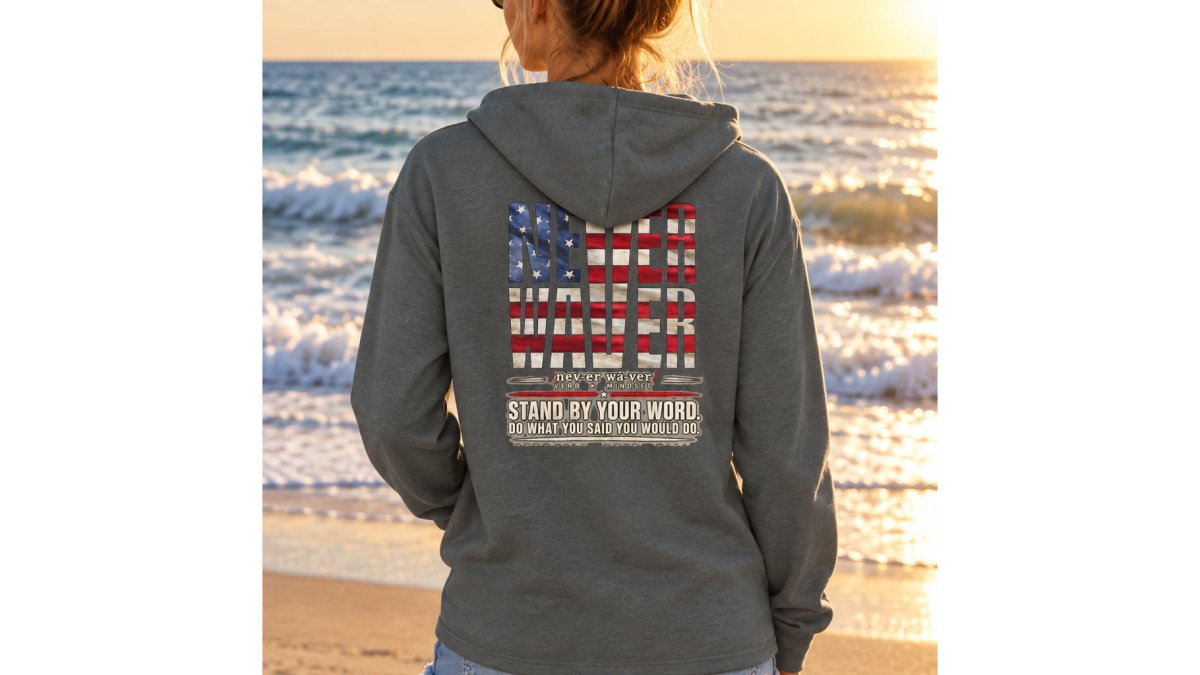
Never Waver® Definition Hoodie — Stand By Your Word Back Graphic Womens →
Books About Ethical Choices for Teenagers
Ethical choices rarely arrive labeled. They show up as a shortcut on a test, a friend asking for a favor, or a chance to take credit for someone else's work. Books about ethical choices help teens recognize these moments as decisions, not accidents.
The most useful titles tend to present a dilemma with no easy exit. The character has to weigh loyalty against honesty, or safety against fairness. Those tensions are where teens learn to reason through pressure rather than react to it.
Practical books can supply a method. A simple sequence works well for many readers: name the choice, identify who it affects, consider what you would want to be true about yourself afterward, and then act. Repeating that sequence builds the habit before the pressure hits.
How to Choose the Right Book for Your Teen's Age and Situation
Not every book fits every teen. A thirteen-year-old facing first-time social pressure needs something different from a seventeen-year-old preparing for a job or a leadership role. Matching the book to the age and the situation matters more than matching it to a list.
Start with the situation your teen is in. If they are dealing with friends pushing them toward risky behavior, choose stories centered on peer pressure. If they are struggling with honesty at school, choose titles about truth-telling.
Then consider content and maturity. Some young adult titles deal with heavy themes such as violence, substance use, or family crisis. Preview a book before handing it over, and check whether its themes match your teen's readiness.
Finally, weigh format. A novel tends to work for teens who connect through character. A practical book suits teens who want direct strategies. Many families use one of each.
Talking Through the Book With Your Teen This Week
A book does most of its work in the conversation after it. Pick one title from this list and set aside a short, low-pressure time to talk about it. Dinner or a car ride often works better than a formal sit-down.
Try these questions to get started:
- What decision did the main character face, and what made it hard?
- What would you have done in their position, and why?
- Did the character's choice cost them anything? Was it worth it?
- Is there a moment in your own life that felt similar?
Let your teen do most of the talking. Your job is to listen, ask a follow-up, and avoid turning the discussion into a sermon. Teens are far more likely to remember a conversation they led than a lesson they were handed.
If you want to go further, pair the reading with a practical exercise. Ask your teen to name one small situation this week where they could practice integrity, then check in on how it went.
The strongest integrity is built one quiet decision at a time. A good book gives a teen a head start, and a steady conversation helps it stick. Keep your word, show up, and stand by what matters. And Never Waver®.
Frequently Asked Questions
What books teach teenagers about integrity?
Look for novels where the main character has to choose between an easy path and the honest one, and then lives with the result. Stories that show the cost of a broken promise tend to stick with teens longer than lectures about honesty. Pair a story with a few discussion questions so your teen can name what the character gave up and why they chose to keep their word anyway.
What are the best young adult books about standing up for your beliefs?
The strongest titles show a teenager holding a position when friends, family, or a group push back. Choose books where the stand has a visible price, such as lost friendships or lost standing, so the conviction feels earned rather than convenient. Reading a few with different settings helps teens see that conviction looks different depending on the pressure they face.
Which books help teens handle peer pressure?
Peer pressure books work best when they show the moment of decision, not just the aftermath. Look for stories where the character feels the pull to fit in, weighs what it would cost, and picks a course of action. Practical nonfiction that walks through refusal scripts can complement a novel, especially for a teen who learns better from a clear plan than from a story alone.
How do I choose a book about integrity for a teenager?
Start with the pressure your teen actually faces: friendships, school, online life, or family expectations. Check the age guidance and content notes before buying, since books for younger teens and older teens handle difficult material differently. Then read the first chapter together if you can, and ask whether the main character's choices feel honest enough for your teen to respect.


